Squashing the trail does nothing — the queen keeps producing thousands more. We use slow-acting gels the workers carry home, combined with perimeter barriers and entry-point sealing, to shut the colony down for good.
Warning signs
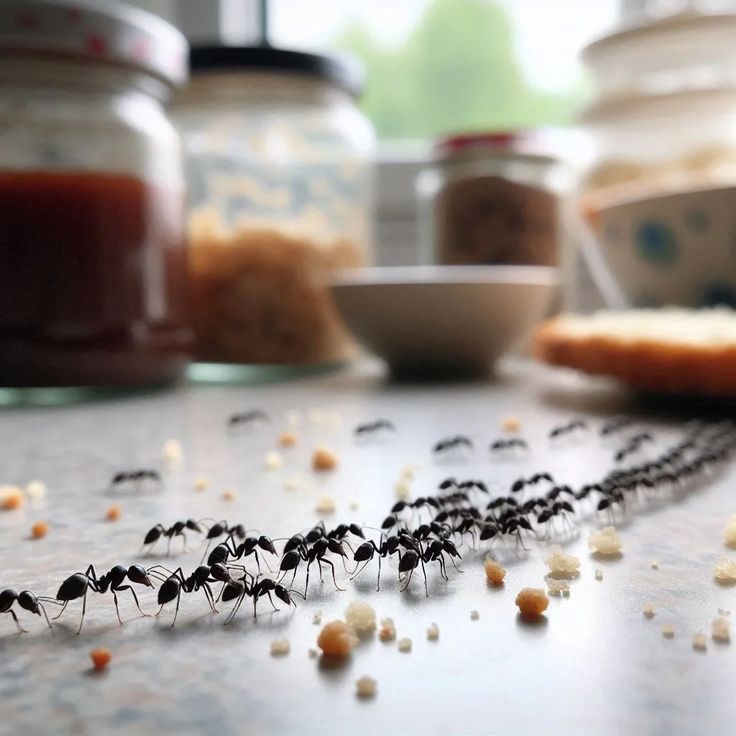
- Organised trails to food, water or sweets
- Fine soil piles along skirtings, patios and pavements
- Winged ants indoors after rain (swarming colonies)
- Wood shavings near frames (carpenter ants)
Why act fast
- Contaminated food and surfaces
- Carpenter ants tunnelling into damp structural wood
- Painful bites from some species
- Rapid colony expansion through walls and gardens
Our approach
01
Species & nest identification
Black house ants, pharaoh ants and carpenter ants need different baits and tactics.
02
Gel baiting
Workers carry slow-acting bait back to the nest — eliminating the queen and the colony.
03
Perimeter & entry treatment
Residual barriers along foundations, windows and door frames stop re-invasion.
04
Exclusion advice
We show you the cracks, plants and food sources that invite ants in.
Before we arrive
- Wipe down surfaces and store food in sealed containers
- Note where trails appear — it guides bait placement
- Clear access along skirtings and window frames
After treatment
- Don't kill foraging ants or spray near baits — they carry the treatment
- Expect a few days of activity as the bait spreads
- Keep surfaces clean so bait remains the best food around
Know your pest
Common questions
Why not just spray the ants I see?
Contact spray kills a handful of workers; the colony replaces them within days. Bait reaches the queen — one treatment, real solution.
Are the baits safe for kids and pets?
Yes when applied correctly — gel goes into cracks and crevices, never open surfaces. We'll point out (or hide) every placement.
Ants keep returning every rainy season — why?
Rain floods outdoor nests and colonies relocate indoors. An annual preventive perimeter treatment before the rains stops the cycle.